
Why Traditional DAM Systems Are Failing in 2025
Marketing teams waste 21% of their time searching for digital assets. That’s one full workday every week lost to file hunting. A campaign-ready product photo exists somewhere—you just can’t find it. When you finally locate it, you discover it’s outdated, the wrong resolution, or missing usage rights documentation.
This isn’t just frustrating. It’s expensive. Companies lose an average of $5.7 million annually due to poor digital asset management, according to recent IDC research. Yet most organizations still treat their digital assets like junk drawers rather than the strategic capital they represent.

The Digital Asset Crisis Crushing Modern Brands
Picture this: Your CMO needs the new product launch assets. The photographer delivered files three weeks ago. But where are they?
Sarah from marketing thinks they’re in Dropbox. Tom from creative insists they’re on the shared drive. The agency uploaded them to WeTransfer, but that link expired. Meanwhile, outdated product images are still circulating because nobody knows which version is current.
This scenario plays out thousands of times daily across enterprises. The consequences cascade:
Brand inconsistency erodes customer trust when outdated logos appear in presentations. Duplicated work drains budgets as teams recreate assets that exist but can’t be found. Legal exposure multiplies when usage rights aren’t tracked. Security risks escalate when sensitive files travel through unsecured channels. Collaboration breakdowns delay launches when partners can’t access what they need.
Traditional file storage solutions—Dropbox, Google Drive, SharePoint—weren’t built for this. They store files. They don’t manage assets. There’s a crucial difference.
Why Legacy DAM Systems Can’t Keep Pace
First-generation digital asset management systems emerged in the early 2000s. They solved the scattered file problem by centralizing storage. But they created new problems:
Manual tagging nightmares. Someone had to input metadata for every asset. Tags were inconsistent. “Blue_shirt_product.jpg” versus “product_shirt_blue_final_v3.jpg” versus “PROD-SHIRT-BLU-2024.” Finding anything required knowing exactly how it was filed.
Industry silos. Most DAM systems targeted specific verticals—broadcast media, photography studios, or e-commerce. If your business didn’t fit the mold, the tool didn’t fit your needs.
Bolt-on AI. As artificial intelligence emerged, legacy vendors hastily added “AI-powered search.” But when AI is an afterthought rather than the foundation, it delivers disappointing results.
Implementation marathons. Enterprise DAM traditionally required 6-12 month implementations, expensive consultants, and extensive training. By the time you finished setup, your needs had evolved.
The 2025 reality demands something fundamentally different.
The AI Revolution in Digital Asset Management
Modern AI-powered digital asset management doesn’t just store files differently—it thinks about them differently. Here’s what became possible in the past 18 months:
Computer Vision That Actually Sees
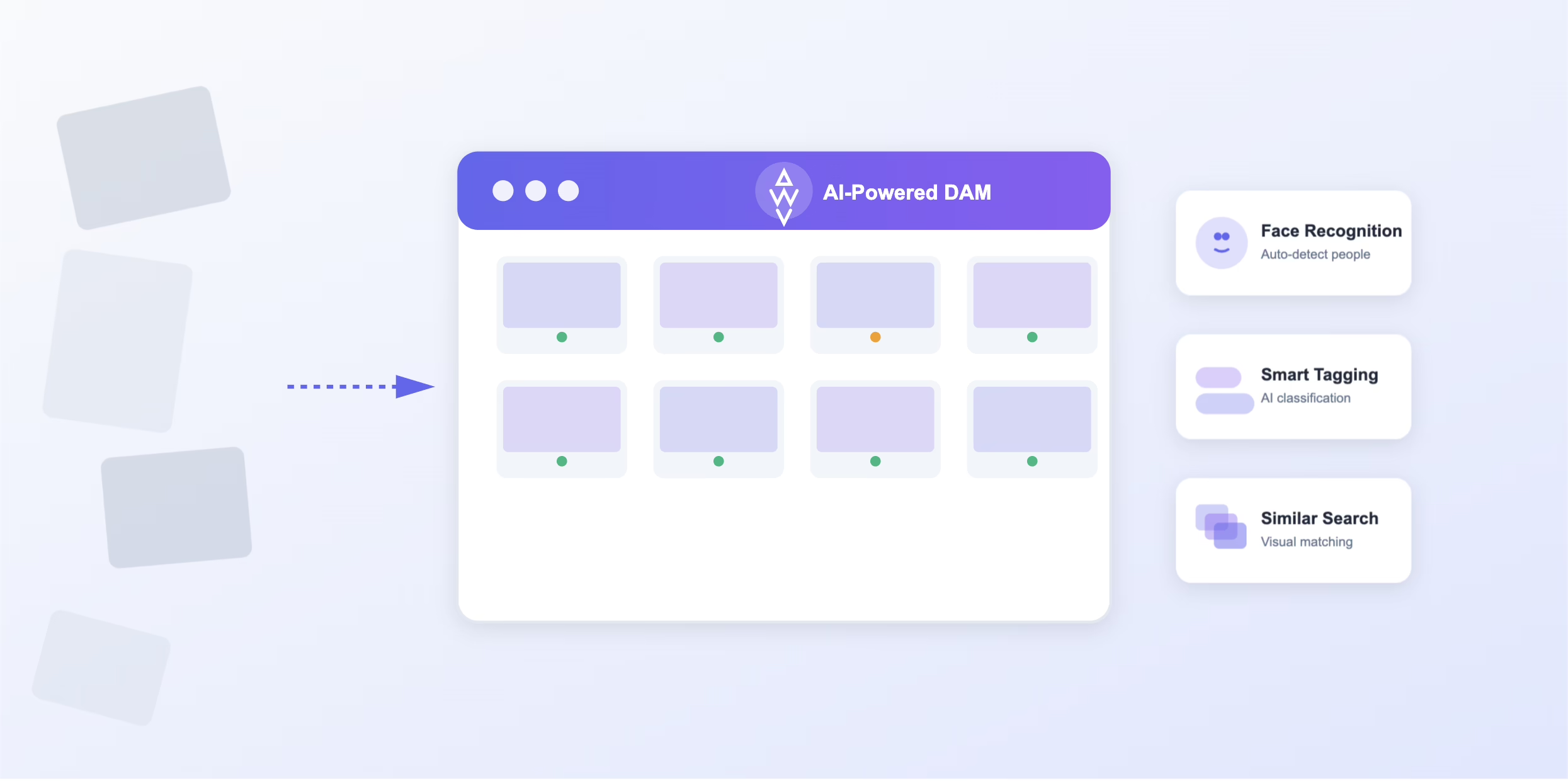
Advanced neural networks now analyze images like human eyes do. They identify objects, scenes, colors, compositions, and even emotions conveyed in photos. Upload a beach sunset image with a couple walking hand-in-hand, and the system automatically tags it with “beach,” “sunset,” “couple,” “romance,” “leisure,” “golden hour,” “silhouette”—without you typing a word.
This goes deeper. AI detects if an image contains people, then uses facial recognition to identify specific individuals if they’re in your person database. Marketing teams managing influencer content or employee photos save hours.
Intelligent Background Processing
Need that product shot on a white background for Amazon? AI removes complex backgrounds in seconds—hair, fur, translucent objects—with precision that previously required skilled designers and Photoshop expertise.
Visual Similarity Search
You remember the vibe of the photo, not its filename. AI-powered similar image search lets you upload any image or select one from your library, and the system finds visually similar assets. Looking for “something like this, but with a different model”? Done.
Automatic Color Intelligence
The system analyzes and catalogs dominant colors, creating searchable palettes. Need all assets with your brand’s specific blue (#1E40AF)? The AI finds them, even if nobody tagged them with color information.
This isn’t incremental improvement. It’s transformation.
Why Intrical Stands Apart in AI-Powered DAM
Intrical was built in 2025, not retrofitted for it. That architectural decision creates tangible advantages:
1. AI-Native, Not Bolt-On
Every feature assumes intelligent automation. Facial recognition, auto-tagging, background removal, and color detection aren’t premium add-ons—they’re standard. The AI learns from your usage patterns, improving its suggestions over time.
When you upload assets, processing happens automatically. No “analyze now” buttons to remember. No wondering if AI will work on this file type. It just works.
2. True Industry Agnosticism
Most DAM systems target e-commerce or media companies. Intrical serves everyone:
Marketing and PR teams manage brand books, campaign assets, presentations, and influencer content. E-commerce businesses organize product photos, infographics, packaging mockups, 3D models, and promotional videos. Tourism companies store hotel imagery, destination content, and customer testimonials. Real estate firms manage property photos, renders, floor plans, and project documentation. Educational institutions distribute course materials and manage student submissions. Government agencies secure public records, event documentation, and official communications.
The flexible attribute model adapts to any industry’s metadata needs instead of forcing you into predetermined fields.
3. Complete File Type Support
Store literally anything: images (PNG, JPEG, WebP, TIFF, RAW), videos (MP4, AVI, MOV, WebM), documents (PDF, DOCX, XLSX, PPTX), design files (PSD, AI, Sketch), 3D models (OBJ, DAE, FBX), audio (MP3, WAV), archives (ZIP, RAR)—even esoteric formats. The preview engine renders over 500 file types without requiring downloads.
4. Enterprise-Grade Governance Without Enterprise Complexity
Flexible attribute model: Create unlimited custom metadata fields. Tag assets with SKUs, campaign names, usage restrictions, expiration dates, or any attribute your business requires.
License and rights management: Visual and system-level restrictions prevent unauthorized use. Track where assets can appear, who can access them, and when usage rights expire.
File status workflows: Mark assets as “Draft,” “Pending Approval,” “Approved,” or custom statuses matching your process. Prevent accidental use of unfinished work.
Role-based access control: Granular permissions ensure team members see only what’s relevant. External partners access curated collections without seeing your entire library.
Version control: Every edit creates a new version. Roll back changes. Compare versions. Maintain complete audit trails.
5. Built for Real-World Collaboration
Guest portals let agencies, freelancers, and distributors access specific collections without requiring full accounts. API access connects DAM to your PIM, CMS, e-commerce platform, and marketing automation tools. Custom file variantsauto-generate social media sizes, web-optimized versions, or print specifications from master files. Collections organize assets for specific campaigns, product launches, or regions—shareable with one link.
Implementation That Doesn’t Disrupt Your Business
Cloud-based architecture means zero installation. Your team logs in through browsers—no software to deploy. IT requirements: internet connection.
Start organizing assets immediately:
- Upload in bulk: Drag entire folders. The system processes thousands of files simultaneously.
- Auto-tagging begins: AI analyzes assets during upload. No waiting.
- Configure attributes: Add custom fields matching your metadata needs.
- Set permissions: Create user roles and assign access levels.
- Invite your team: Email invitations deploy in minutes.
Most teams operate productively within their first week. Compare that to the 6-month implementations legacy systems require.
The ROI Numbers That Matter
Forrester research shows organizations implementing AI-powered DAM realize measurable returns:
32% reduction in time spent searching for assets—reclaiming that wasted workday every week. 47% faster campaign launches when teams access approved assets instantly. 89% fewer brand inconsistency incidents when everyone uses current, approved materials. €200K+ annual savings for mid-size companies from eliminated duplicate content creation.
One Intrical customer, a European fashion retailer, quantified their improvement: “We reduced our content preparation time from 3 days to 4 hours. That’s 94% faster. Our small team now handles the workload that previously required external contractors.”
Transparent Pricing That Scales With You
Starter Plan: €199/month
- 100GB storage
- 1 user
- All AI features included
- Perfect for small teams testing the waters
Team Plan: €459/month
- 1TB storage
- 15 users
- Guest portals for external collaborators
- Growing businesses’ sweet spot
Enterprise Plan: Custom pricing
- Unlimited storage
- Unlimited users
- Dedicated implementation manager
- On-premise deployment available
- For organizations with complex requirements
All plans include the same AI capabilities—facial recognition, auto-tagging, background processing, similar image search. No feature gatekeeping. Annual billing saves 10%. Free trial available.
Compare this to enterprise DAM vendors charging $50K+ for setup alone, then $2K+ monthly, with AI features requiring separate licensing.
Getting Started
Digital assets are capital, not clutter. Every product photo, brand guideline, video testimonial, and design file represents investment. Protecting and maximizing that investment requires infrastructure built for how teams work today—and how AI will enhance work tomorrow.
Traditional DAM systems were revolutionary in 2005. They’re revolutionary no longer. The question isn’t whether AI-powered asset management will become standard. It’s whether your organization will lead or lag the transition.
Schedule your personalized demo to see how Intrical’s AI-native DAM transforms scattered files into strategic advantage. No high-pressure sales. Just a clear-eyed look at whether this solves problems you actually have.
Your future self—the one not spending Tuesday morning searching for that logo file—will thank you.